
Sandblasting wrought iron is one of those jobs where the difference between a good crew and a careless one shows up in the details — literally. A wrought iron railing, gate, or fence has scrolls, twists, collars, and hammered edges that somebody spent real time forging. Blast it wrong and you round off every one of those edges until an ornamental gate looks like a cheap galvanized panel. Blast it right and you strip decades of peeling paint and rust down to clean, tight metal while every curl and leaf stays crisp. Here in Crescent City and around Putnam County, we get called out to a lot of old iron — lakefront porch railings on Crescent Lake, estate fences out in fern country, dock gates the salt air has been chewing on for years. Here is the honest version of how it gets done.
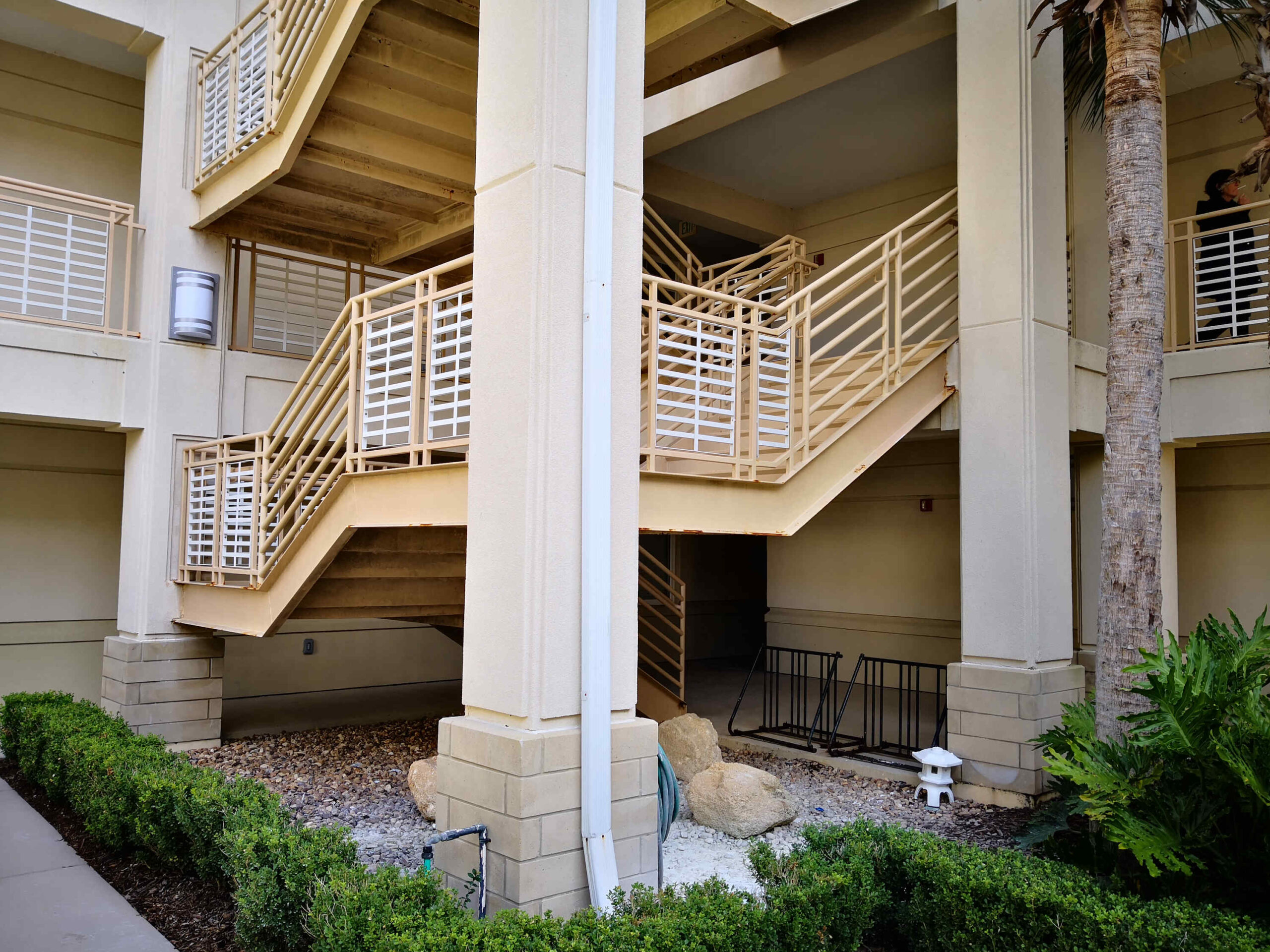
Why sandblasting wrought iron beats a wire brush and a Saturday
Most people start with a wire wheel and good intentions. On a plain flat rail, that can work. But wrought iron is not flat. Paint and rust hide down in the seams where two bars meet, inside the scroll ends, behind the pickets. A wire brush skips right over those spots, so you paint over rust you never actually removed — and it comes bleeding back through in a season. Media blasting reaches everywhere the brush can’t. The abrasive gets into every corner, knocks off the mill scale and the flaking paint, and leaves a uniform profile the new coating can actually grip. That is the whole game with iron: get to bare, tight metal in every nook, then prime it before it can rust again.
The other reason we blast is speed with control. A gate that would take you a full weekend with a grinder and a wire cup comes clean in a fraction of the time, and it comes clean evenly — no shiny spots next to spots you gave up on.
The honest part most people skip
Here is the inconvenient truth: aggressive blasting can wreck fine detail if the operator treats iron like a steel I-beam. Too much pressure, the wrong media, or holding the nozzle too close and too square will erode soft edges, pit thin bar stock, and warp light gauge scrollwork. Real wrought iron is also softer than modern mild steel, and antique pieces can be thinner than they look under forty years of paint. So the skill is not blasting harder. It is blasting smarter — backing the pressure down, picking a gentler abrasive, and reading each piece. Anybody who quotes you a wrought iron gate the same way they’d quote a dumpster is telling you they don’t do many gates.
6 proven ways to sandblast wrought iron without losing the detail
These are the rules our crew actually works by when a piece of ornamental iron comes off the truck.
1. Match the media to the metal. For delicate scrollwork and thin antique bar, we drop the coal slag and reach for a finer, gentler abrasive — sometimes glass bead or even soda for the softest pieces. Heavy fence posts and thick modern rail can take a coarser media because there’s meat there to work with. We’ll tell you straight which one your job wants. The media choice is the single biggest factor in whether the detail survives.
2. Drop the pressure, don’t chase it. On ornamental iron we run lower nozzle pressure than we would on structural steel. It takes a little longer, but you cannot un-erode a hammered leaf. Lower pressure removes paint and rust without carving into the base metal.
3. Mind the angle and the distance. Blasting dead-square and up close is how edges get rounded. We work at an angle and keep the nozzle back so the abrasive skims and lifts the coating instead of gouging. On tight scrolls that means constant small movements, not parking the nozzle on one spot.
4. Treat old lead paint the right way. A lot of pre-1978 iron — old estate fences, porch rails on the historic homes around Putnam County — is wearing lead paint. You do not dry-blast that in the open and walk away. It has to be contained and the dust handled properly. The EPA lays out why in its Renovation, Repair and Painting rules, and for anything with suspect paint we’ll talk through containment and often steer toward a green (dustless) blasting approach that keeps the dust down and out of your yard.
5. Prime before flash rust sets in. This is Florida. Bare iron starts flash rusting almost before you’ve packed the hose up — the humidity here does not wait. So we don’t blast a gate on Monday and prime it Thursday. We blast and get primer on it the same day, while the metal is still clean and dry. That is where our on-site painting and coating matters: one crew blasts and coats, same day, same people, so there’s no bare-metal window for rust to sneak back in.
6. Know when a piece can’t come off in place. Some railings and gates blast beautifully right where they stand. Others — fragile antiques, badly corroded joints, pieces set in old concrete — are better removed, blasted on the bench, and reset. We’ll be honest about which is which before we start, not halfway through.
When we’ll tell you not to bother
If your railing is newer, the coating is sound, and it just needs a scuff and a fresh topcoat, you don’t need a blasting rig — a light sand and a good paint will do, and we’ll say so. Sandblasting wrought iron makes sense when the paint is failing, rust has taken hold, or the detail is buried under too many old coats to save any other way. If a wire brush and an afternoon will genuinely fix it, that’s the honest answer, and we’d rather give it than sell you a job you don’t need. The next time you do need real work done, you’ll remember who told you the truth.
It’s also worth knowing that iron is one of many surfaces we handle. If your project is mixed — an iron gate set into a masonry wall, or rail bolted to a concrete porch — the same crew that does the metal sandblasting can prep the rest, so you’re not juggling two contractors.
Crescent City, Putnam County, and the salt-air reality
Wrought iron around here lives a hard life. Homes along the St. Johns River and Crescent Lake sit in damp, salty air that finds every bare spot. Dock gates and waterfront railings rust from the bottom up where spray collects. Old fences out toward Pierson and the fern farms have decades of paint layered on by owner after owner. That environment is exactly why doing it right — clean profile, same-day primer, the correct coating — pays off. A gate blasted and coated properly here will outlast three quick rattle-can touch-ups. For deeper background on abrasive blasting and surface prep, the standards bodies like SSPC spell out the profiles a lasting coating needs, and we prep iron to hit them.
Wrought iron rewards patience and punishes shortcuts. Match the media, ease off the pressure, keep the angle right, respect old lead paint, prime while it’s clean, and know when to leave a piece alone. Do that, and a hundred-year-old gate looks a hundred years younger — with every scroll still sharp.
What a wrought iron job actually looks like start to finish
People ask what the day looks like, so here it is plain. First we look the piece over and read it — how thick is the bar, how fragile are the joints, is there suspect lead paint, can it be blasted in place or does it need to come off. Then we set containment so the abrasive and old coating stay put and don’t blow across your yard or the neighbor’s dock. We dial in the media and the pressure on a hidden spot first, confirm the detail is holding, and only then work the whole piece — seams, scrolls, and picket bottoms included. The second the iron is clean and dry, primer goes on. If you’ve signed off on color, the finish coat follows the same visit. You end the day with a gate or railing that’s bare-metal clean underneath and fully protected on top — not a half-stripped piece sitting out overnight collecting Florida dew. One crew, one day, no finger-pointing between a blaster and a painter who never met.
Need sandblasting in Crescent City or nearby? Call (386) 800-3366 for a free on-site estimate. You will reach someone who actually does the work.